Thursday, June 22, 2023

Nigerian Morolake Omoya makes History as the first Black University of California Los Angeles Student to earn 3 Degrees in Civil and Environmental Engineering

Congratulating her, Associate Adjunct Professor Audrey P. O'Neal, noted that Rolake, as she is fondly called, is "a brilliant scholar, leader, role model, and advocate for diversity, equity, and inclusion", who is "guided by faith and her supportive family in Nigeria to be the change she wants to see."
Rolake herself opined that she has through her history-making 3 degrees earning years at UCLA's Samueli School of Engineering learnt vital life lessons "that we rise by lifting others and others are lifted because we rise".

Congratulations to this trailblazing Nigerian lady, Dr. Morolake Omoya, PhD Civil and Environmental Engineering.
Read more at UCLA Newsroom
Tuesday, May 23, 2023
How to Edit Sent Messages on WhatsApp
Did you make a mistake (spelling, context or what have you) in a sent WhatsApp message? Relax, don't delete. Just press and EDIT. Edit? Yes!

“For this, within 15 minutes of sending the message, you have to tap and hold that message for a while and then select the option of ‘Edit’ from the menu.” Receivers of the messages would be aware of the correction without seeing the ‘edit’ history.
So, follow these four steps to edit sent messages on WhatsApp:
1. Open your WhatsApp chat
2. Long-press on a sent message
3. Click on ‘Edit’ located at the top of your right hand, from the menu for up to fifteen minutes after.
4. Edited messages will display ‘edited’ alongside them.
Saturday, May 20, 2023
Embracing Change: Rethinking Library Rules and Regulations for Enhanced Resource Utilization
Azeez Adeoye
Library rules and regulations could be one of the impediments to the use of its resources. Students are concerned about the limitations they experience due to stringent library rules and regulations. In the 21st century, libraries have competitors in ICT tools. It's high time library professionals revisited the archaic rules that prevent users from maximizing the potential benefits offered by libraries.
One such rule is the prohibition of eating and drinking in the library.

Reading is a mental exercise that drains and dehydrates library users during the process of studying. Therefore, users need to stay hydrated to sustain concentration while reading. But in a situation where library users travel the extra mile to drink water, this obstructs the flow of information and truncates comprehension.
Though Western libraries provide water dispensers within the library and sometimes coffee corners and microwaves, among other gadgets to ease light consumption, concentration, mental stability, and constant use of library resources. This is the trend in 21st-century library services, and African libraries need to decolonize themselves and embrace change.
By offering more flexibility in our library rules and regulations, such as allowing food and drink within designated areas, offering extended hours, and implementing more relaxed noise policies, we can create a more comfortable and welcoming environment for our patrons.
This, in turn, will make our library more attractive compared to our competitors, such as ICT tools. We believe that by meeting the changing needs of our users, we can entice and endear them to use our resources, which will help us to maintain our relevance in the 21st century.
Friday, May 19, 2023
Passion and Purpose: The Essence of Librarianship Beyond Monetary Considerations
Azeez Adeoye

If money were not a problem, would you still choose to remain a librarian?
Thursday, May 18, 2023
NEED FOR INCLUSION OF LIBRARY PERIOD IN NIGERIAN SCHOOL TIMETABLE
Olabode Olajide (Ph.D.)

I write to appeal to concerned authority and other education stakeholders in the country to introduce, compulsorily, “library period” into timetable of both primary and secondary schools across the country. This is imperative considering the high level of inadequate library skills exhibit by Nigerian undergraduates. It is not uncommon to hear undergraduates complaining about their college, polytechnic or university libraries of inability to provide or satisfy their information needs no matter how equipped the libraries might be. Research has shown that in most cases, it is not as if libraries don’t have what it takes to satisfy the students’ information needs but the skills required of students to effectively utilize the library resources to the fullest are lacking. Though, students are not to be totally blamed for this absurdity but our educational system that allows school to operate without functional library. Imagine a situation where student never stepped into the four walls of library before gaining admission to higher institution. Yet, it happens, and library at that level of education is unavoidable. Students will ever need it for either personal, recreational, assignment, learning or research purpose.
Monday, January 30, 2023
Promoting Nigerian Research With Open Science: Digital Object Identifiers (DOIs) for Research Publication
Idowu Adegbilero-Iwari
The 2023 Eko-Konnect Users conference that held between January 24-26, 2023 virtually had distinguished scholars, professionals and representatives of relevant government agencies discussed topics relating to the central theme, Promoting Nigerian Research With Open Science.

I spoke on the topic, Digital Object Identifiers (DOIs) for Research Publication, in the Session 4 of the event, Maximising Persistent Identifiers For Global Research Visibility. DOI is a chief member of the PIDs (persistent identifiers) scholarly communication infrastructure family. DOI provides a system for persistent and actionable identification and interoperable exchange of managed information on digital networks.

Friday, December 23, 2022
Society for Scholarly Publishing Announced 2023 Fellows: Two Nigerian Librarians Awarded!

Two distinguished Nigerian librarians: Idowu Adegbilero-Iwari, Afe Babalola University, Ado-Ekiti and Oyedele Abimbola Ojeniyi, Central Bank of Nigeria Center for Economics and Finance, University of Ibadan, make the prestigious award.
The full list of 2023 Fellows are:
- Andrea Blatz, University of Texas Press
Anna Maltbie, Wiley
SSP 2023 Fellows - Cassandra Larose, Royal Roads University
- Chen He, Wuhan University
- Chenyue Jiao, University of Illinois Urbana Champaign
- Francesca Soldati, University of Aberdeen
- Idowu Adegbilero-Iwari, Afe Babalola University, Ado-Ekiti
- Jamaica Jones, University of Pittsburgh
- Janaynne Carvalho do Amaral, School of Information Sciences, University of Illinois Urbana-Champaign
- Mario Pallua, Libertas International University
- Mary Alice Keller, HCA Healthcare
- Nataliia Kaliuzhna, Kyiv National University of Culture and Arts; State Scientific and Technical Library of Ukraine
- Oyedele Abimbola Ojeniyi, Central Bank of Nigeria Center for Economics and Finance, University of Ibadan
- Rebecca Michaels-Walker, Toronto Metropolitan University
- Sarah Frances Gordon, Universidad Iberoamericana, Mexico City
- Shriyaa Mittal, AIP Publishing

Congratulations!
See more details about the fellowship and SSP here
Thursday, October 13, 2022
Towards Curing the Predatory Publishing Malady in the South: The TriangleSCI Facilitation

Our team's project was accepted in June as one of the five teams (projects) to participate in the ongoing Triangle Scholarly Communication Institute in Duke University, Durham, NC, United States. Our project aims to mitigate the predatory publishing debacle through a community of practice (CoP)-developed toolkit and/or strategies. Members of our team have varying expertise in the core components and contexts of the project. The cross-regional team represents a good example of North-South collaboration of scholars/librarians from Canada- Prof Dan O'Donnell; Algeria- Prof Samir Hachani; Canada/United States- Dr. Nathan Woods; Bangladesh- Shaharima Parvin; Nigeria- Dr. Basiru Adetomiwa and Idowu Adegbilero-Iwari. Post TriangleSCI, we hope to expand the project to other regions of the Global South therefore recruiting more participants into a named community.
So far it has been a wonderful experience participating in the institute generously funded by the Mellon Foundation.
The participating teams and projects in the 2022 institute include:
- A Post-Pandemic Reckoning: Improving Metadata for Better Accessibility to Scholarly Archives for People with Disabilities by Erika Fülöp, Dene Grigar, Jarah Moesch, Richard Snyder
- Building a contextual alternative to scholarly journal un/safelists by Joshua Neds-Fox, Matt Ruen, Teresa Schultz, Brianne Selman, Leila Sterman, Stephanie Towery
- Equity Toolkit for Disability Inclusion by Karen Stoll Farrell, Kimberly Gladfelter Graham, Simon Holt, Sylvia Izzo Hunter, Erin Osborne-Martin, Stacy Scott
- Intercultural & interdisciplinary open resources supporting environmental justice by Nadine Aboulmagd, Alex Armstrong, Elena Berg, Jeff Gima, Fiona Glasgow, Antonio Lopez, Dalal Rahme
- Towards Curing the Predatory Publishing Malady in the South: Community of Practice Approach to Developing Local Strategies and Toolkits by Idowu Adegbilero-Iwari, Basiru Adetomiwa, Samir Hachani, Dan Paul O’Donnell, Shaharima Parvin, Nathan Woods
Wednesday, March 9, 2022
"Libraries on the Front Line of War": Iryna Kuchma's Narration of Libraries' Inspiring Roles during the Russia Invasion of Ukraine
Iryna Kuchma
 |
| Originally posted to EIFL blog |
In times like these everyone is doing much more than they can. The Ukrainian Library Association reports that libraries are providing shelters, facilitating access to information and the internet, launching humanitarian hubs, documenting the war and supporting each other.
Many libraries have turned their book storage spaces into bomb shelters for local communities - cozy with lots of interesting books around! Tea and support is also offered, so this is already considered a new library service.
In more or less quiet parts of Ukraine, libraries continue to offer access to information - guides from local authorities, tips from psychologists for coping each day, motivational quotes from literature - and access to the internet. They also serve as hubs to collect goods and humanitarian aid for defence units and hospitals, and to sew medical gowns and knit camouflage nets.
A national digital library kicks-off, recording the war - photo, video and audio facts that document the Russian aggression and the Ukrainian struggle; posters, memes and jokes showcasing creativity; information showing support from the international library community and drawing attention to fake news and information.
A librarian self-support network is also being built, offering help and responding to requests for help.
And planning for rebuilding of damaged library buildings has started as well - together with the Ukrainian charitable foundation Library Country which is documenting the damage.
About the writer
Iryna Kuchma is a multilingual expert in open access, open data and open science. She works with EIFL as Open Access Programme Manager since 2008 where in collaboration with libraries and library consortia in more than 60 countries in Africa, Asia and Europe, she advocates for open access to research results, facilitates the development and implementation of open science policies and infrastructures, and provides support and training. Iryna is based in Ukraine.

This work is licensed under a Creative Commons Attribution-ShareAlike 4.0 International License
Tuesday, March 1, 2022
Re: Internationalizing Nigerian Journals Using OJS: Time to Act is Now!
Idowu Adegbilero-Iwari
With reference to my December 3, 2018 post titled "Internationalizing Nigerian Journals Using OJS: Time to Act is Now!", I am glad to announce the huge role I played leading to the online presence of two Nigerian journals and still counting. With my advice and expertise in conjunction with the technical prowess of a colleague and the goodwill of the editorial teams of these two journals we have now begun the journey to massively enroll more Nigerian journals online and consequently put them on the International map. The PKP's Open Journal System is the preferred choice of platform given its leading role in the sector and being a supporting infrastructure for Open as default (Open- Science, Access, etc) which I actively advocate for.
I hereby gladly present our two latest journals online as mediums of communicating credible research of scholars in cognate fields from every part of the world:
1. ABUAD International Journal of Natural and Applied Sciences (AIJNAS)
 |
| AIJNAS |
2. Fountain of Knowledge Journal of Library and Information Science (FKJOLIS)
 |
| FKJOLIS |
FKJOLIS is a scholarly society journal of the Nigerian Library Association (NLA) Ekiti State Chapter. The journal is a peer reviewed publication that publishes scholarly articles and essays that contribute to knowledge and boost the frontiers of research in the areas of library and information science (LIS) scholarship and practice.
In addition to these, we have improved capacity through experience in getting Digital Object Identifier (DOI) for published articles which will go a long way in giving Nigerian journals permanent footprints in the scholarly communications landscape.
Call it walking the talk, you are absolutely not wrong!
This work is licensed under a Creative Commons Attribution-ShareAlike 4.0 International License
Wednesday, January 19, 2022
Alleged 'Plagiarism': Appeal Quashed, Justice Served for FUNAAB's Associate Professor and Assistant Lecturer
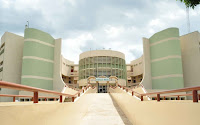
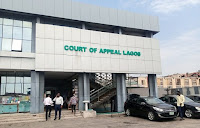
It is hoped that the university will now do the needful and learn to follow due process especially shunning malice and vendetta when handling a serious issue like plagiarism. It would be recalled, however, that the illegality was perpetrated in May 2013 during the administration of the then Vice-Chancellor, Prof Olusola Oyewole.
When the righteous are in authority, the people rejoice: but when the wicked beareth rule, the people mourn- The Holy Bible